
For years, search meant typing two or three words into Google and scanning the results. "Painter Calgary." "Furnace repair." "Web design company."
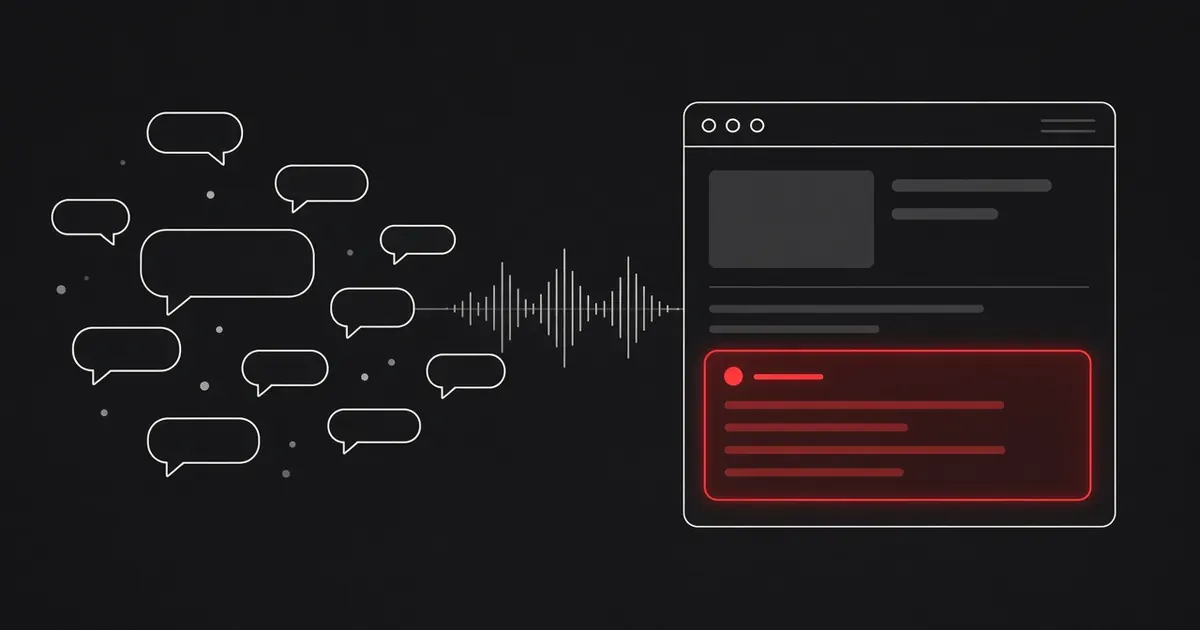
That is not how people search with AI. With tools like ChatGPT, Gemini, Claude and Grok, people ask in full sentences, and often it becomes a conversation. They ask a question, read the answer, and follow up with another question. Some of them are not typing at all. They are talking to the tool by voice and listening to the answer.
What Conversational Search Looks Like
The difference is easier to see side by side. A traditional search might look like this:
- "HVAC company Calgary"
The same person asking an AI tool might say something closer to:
- "My furnace is making a noise and I live in Calgary. Should I repair it or replace it, and who should I call?"
That is one question carrying a problem, a location, a decision and a request for a recommendation. The AI is going to answer all of it, and it will usually name a few businesses along the way.
Why this changes what your website needs
Having those answers within your website makes it easier for AI to pick up your site instead of a competitor's. If your pages only list your services with a few keywords, there is very little for an AI tool to work with when someone asks a real question. If your pages answer the questions your customers actually ask, you are giving the AI exactly what it needs.
How to Find the Questions Your Customers Are Asking
My background is in audience research, and the principle has not changed: stop guessing what people want and listen to how they actually talk. A few simple places to start:
1. Your own phone calls and emails
Every question a customer asks you on the phone is a question someone else is asking an AI tool. Write them down. The ones you hear every week deserve a clear answer on your website.
2. Your sales and service team
The people closest to your customers know the hesitations, comparisons and "what if" questions that come up right before someone decides. Those make strong answer sections and blog topics.
3. The AI tools themselves
Ask ChatGPT, Gemini, Claude and Grok the questions your customers would ask. Notice which businesses come back, what the answers focus on, and what is missing. That gap is your opportunity.
How to Put the Answers on Your Website
Once you know the questions, the job is to answer them clearly, in plain language, in places both people and machines can find:
- Service pages with real answers. Each service page should explain what you do, who it is for, what it costs or how pricing works, and what happens next.
- FAQ sections. Short, direct answers to common questions, ideally marked up with structured data. Our guide to schema markup for local SEO explains how that works.
- Blogs written in your voice. Thought-leadership articles that answer bigger questions in depth, written from your expertise rather than generic filler.
- Connected topics. Group related questions and link them together so your site clearly covers the subject. We explain this approach in content clustering for Calgary businesses.
Does It Work? I Tested It on Our Own Business
When I asked an AI tool about our own category, StyleLabs came back in the answer. Honestly, it did not surprise me. My partner has been working on exactly this for our business: making sure our website answers the questions people ask, and that the signals around our business back it up.
That is the same work we now do for clients. It is not a trick or a one-time setting. It is a steady process of understanding what your customers ask and making sure your business is the clearest, most trustworthy answer.
Start With One Question
You do not need to rebuild your website to get started. Pick the one question your customers ask most often, and make sure there is a clear, honest answer to it on your site this month. Then do the next one.
If you want help finding those questions and turning them into pages that AI tools pick up, that is what our AI search optimization service is built for.